The Russian FSHD Patient Registry

The first systematized database for studying FSHD in Russia

Data protected
Registry today
493
participants in the registry
410
families from Russian regions
2019
establishment date
7
years together

Data as of February 2026 · The registry continues to grow

Free participation

Russian FSHD Patient Registry

The first systematized database for studying FSHD in Russia.

Establishment of the Registry

The registry was founded in 2019 at the Research Centre for Medical Genetics (RCMG), following the successful development and validation of a specific genetic test.

Registry Goal

Establishing a database of russian FSHD patients aimed at enhancing diagnostic and therapeutic outcomes.


Standardized Approach

By adhering to international data collection standards, we ensure compatibility with global registries and enable participation in worldwide research initiatives.

Registry Objectives

Why is the registry needed?

The registry addresses key challenges in FSHD research and treatment in Russia.

01

A standardized database

Unified data collection on Russian FSHD patients.

02

FSHD natural history study

Long-term follow-up for a deeper understanding of disease trajectory and its modifying factors.

03

Sharing Expertise

A platform for sharing insights between doctors and patients and enabling participation in global research.

04

Research planning

Registry data help plan clinical studies and develop new treatments.

Who can join the registry

  1. Patients with FSHD who have genetic confirmation of the disease and a signed consent form.
     
  2. Patients without genetic confirmation but who have undergone examination at the RCMG and met the inclusion criteria.
     
  3. Relatives of FSHD patients who show signs of the disease.
How to join

Two ways to join the registry

There are two ways to participate in the registry. In both cases, patients are asked to complete an informed consent form to join the registry.

Option 1

Online participation

Not able to visit the RCMG in person? You can still participate remotely. This involves filling out specially designed questionnaires about the patient's health status.

If you would like to be considered for the registry, please complete the application form.

Application form
Option 2

In-person visit

Would you prefer to see a doctor in person? You can make an appointment with Dr. Anna Kuchina at the RCMG. She will perform a full assessment of the patient's condition. This consultation is free, just remember to book in advance.

+7 (495) 111-03-03 To schedule an appointment, please request a consultation with Dr. Anna Kuchina.


Already a registry participant? If you have an individual code, you can log in to our secure platform and complete health questionnaires.

Your individual code will be sent to you after we receive your signed informed consent form.

Platform under development

Data protection

All personal and medical data are anonymized. Access is restricted to authorized registry specialists only.


Team

Registry Team

The registry is managed by RCMG specialists who work on FSHD diagnostics, patient monitoring, and research.

Mikhail Skoblov

Mikhail Skoblov

PhD
Head of the Department of Functional Genomics (RCMG). Professor at the Department of Molecular Genetics and Bioinformatics (RCMG).
Aysylu Murtazina

Aysylu Murtazina

PhD, Associate Professor
Head of the Laboratory of Neurogenetics (RCMG). Associate Professor at the Department of Genetics of Neurological Diseases (RCMG).
Darya Sherstyukova

Darya Sherstyukova

Junior Researcher
Junior Researcher at the Laboratory of Neurogenetics and the Laboratory of Proteomic Analysis of Hereditary Diseases (RCMG).
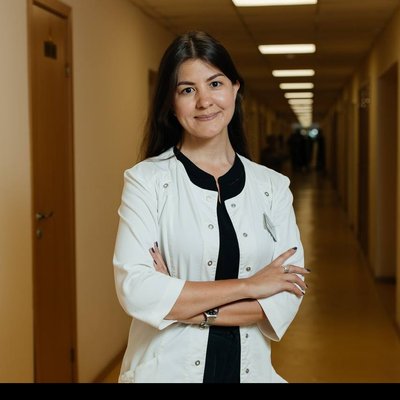
Anna Kuchina

Anna Kuchina

Researcher, Medical Geneticist
Researcher at the Laboratory of Neurogenetics (RCMG). Assistant at the Department of Genetics of Neurological Diseases (RCMG).
Resources

Publications and patents from the RCMG research group

Scientific review on genotype-phenotype correlations in FSHD (2019) PDF FSHD1 Diagnosis in Russian Population Using a qPCR-Based Approach (2021) PDF Educational and methodological guide on Facioscapulohumeral muscular dystrophy (2025) PDF